

Classic & Collector Car Finance
★★★★★ 5.0 Google rating
Prefer to talk? Call 0447 654 321
No credit check to enquire. Christian replies the same business day.
Prefer a set time? Book a 15-minute call
Reviewed by Christian Tucker, Credit Representative 549381, and the AGFB specialist team · October 2026 · How we check our information
Classic car finance should understand the car. Classic, collector and enthusiast vehicles are not assessed like a late-model car. Age, condition, provenance and how the car is actually used all change what a lender will consider. We work with the lenders and structures that take those things into account. Our guide to financing a classic, collector or prestige car explains what lenders look at.
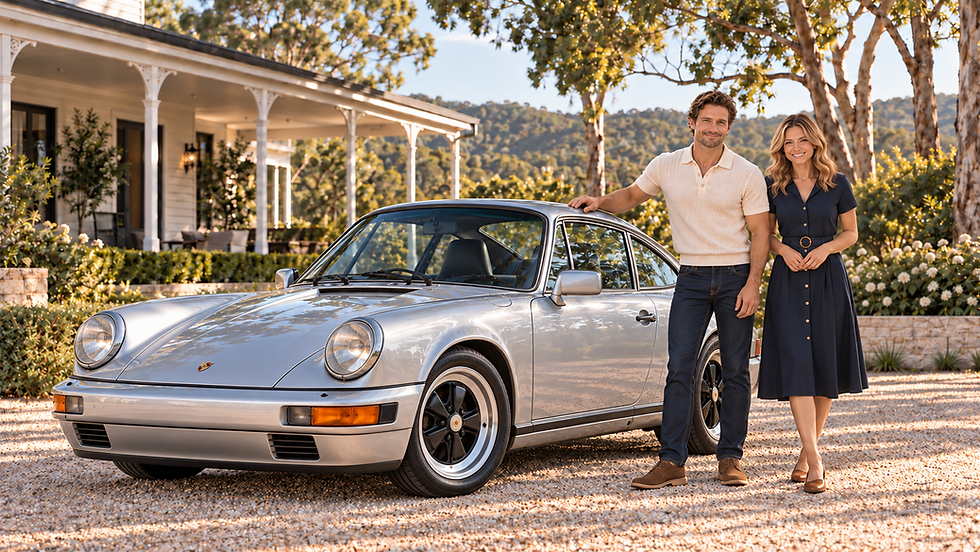
VEHICLES WE ARRANGE FINANCE FOR
Enthusiast ownership covers a wide range of cars. These are the categories we see most often.
Classic & Vintage
Older vehicles kept for enjoyment, events or long-term ownership, where age alone can put a car outside standard motor-vehicle lending.
Modern Classics
Cars from the 1980s through the 2000s that now sit outside ordinary used-car lending, and are often valued well above a standard guide figure.
Collector & Enthusiast
Cars bought to be kept and enjoyed, where condition, originality and provenance matter as much as the drive.
Restoration & Project
Vehicles bought part-restored or unrestored are assessed on their current condition, value and documentation, subject to lender requirements.
Assessed Case by Case
Registration status, modifications and available documentation can affect finance options. We review the vehicle's details against lender requirements before discussing whether finance may be available.
Imports & Specialist Vehicles
Cars brought in under import schemes, where the vehicle's documentation and status can affect how and when finance is able to settle.
WHAT ACTUALLY CHANGES THE OUTCOME
With a specialist vehicle, the structure of the deal usually matters more than the headline rate.
Vehicle Age and Lender Eligibility
The age and nature of a classic or collector vehicle can influence which finance structures and lenders may be suitable.
Valuation and Supporting Evidence
Book values rarely reflect a well-kept specialist car. Independent valuations, auction results and documented history do a lot of work here.
Dealer vs Private Sale
A private purchase changes verification, payment flow and settlement timing. It is workable, but it needs to be planned before you commit to the car.
Ownership Structure
Personal, company or trust ownership each change the products available, the documentation required and how the vehicle is treated.
Purpose of Purchase
Weekend use, event use, display, track use or business use are treated differently. Being clear about this early avoids a decline late.
Deposit and Ownership Costs
Your deposit, loan term, interest and fees all affect the cost of borrowing. Consider repayments alongside insurance, storage, maintenance and any planned restoration costs.
HOW IT WORKS
A specialist purchase moves quickly. The work is in being ready before the car is.
01
Understand the Car and the Purchase
We look at the vehicle, its age and condition, how it is being bought and how you intend to own and use it.
02
Match It to the Right Lending Route
We identify which lenders and structures can realistically consider the vehicle, and what evidence each will want to see.
03
Structure, Prepare and Settle
We prepare the application and the supporting material, and coordinate settlement — including the extra steps a private sale requires.
WORKING DIRECTLY WITH US
Specialist vehicles do not suit a call-centre process. You deal with the person doing the work.
One Point of Contact
One broker handles the enquiry, the structuring and the settlement, so nothing is re-explained and nothing is lost in a handover.
Planning the Purchase
Tell us about any auction date, seller deadline or interstate purchase early. We can explain how the finance assessment and required documentation may affect your timing.
Valuations and Documentation
If a lender requires a valuation or inspection, we explain what is needed for the finance assessment. Independent advice on the vehicle itself remains separate from our lending assistance.
WHY CLASSIC CARS NEED A DIFFERENT KIND OF LENDER
A classic or collector car is assessed as an individual object, not a line in a pricing guide. These are the questions that decide whether finance works and on what terms.
Why mainstream lenders often say no
Most car lenders price vehicles from guide data that thins out as a car gets older, and many set a maximum age for the car at the end of the loan. A collector car can fall outside both rules even when it is worth more than a new one. Classic finance sits with a smaller group of lenders who assess the specific car, its value evidence and its condition.
Valuation evidence
Expect the lender to want independent evidence of value: a valuation from a recognised classic-car valuer, comparable auction results, or both. Originality, condition, matching numbers and documented history all move the figure. The loan is sized against that valuation, not simply the price you agree with the seller.
Agreed-value insurance
Classic lenders commonly require agreed-value insurance, with the lender noted as an interested party, for at least the amount borrowed. Agreed value means the policy sets the car's insured value in advance, instead of relying on a market estimate that may be hard to establish for a rare car. If the car is written off, any payout is still subject to the policy terms, the excess and any other deductions.
Completed cars versus projects
A complete, roadworthy and registered car is the easiest to finance. An unfinished restoration is assessed on its current condition and value, which usually supports far less lending than the finished car would. If you are funding the restoration work itself, other security, such as equity in a property, is often the more realistic route.
Registration and how the car is used
Some owners keep a classic on full registration; others use a club or historic registration scheme that limits how often it can be driven. Check how the lender treats the registration type before you buy, because restricted use can affect both the lender's appetite and the insurance.
Importing an older vehicle
Vehicles 25 years or older may be eligible for a separate older-vehicle import option, but age alone doesn't establish eligibility, and significant modifications can affect it. The car still needs import approval, and import approval doesn't guarantee registration in your state; it must be complied and registered before it can be driven. Budget for shipping, duty, GST, any luxury car tax and compliance on top of the purchase price. Finance usually settles once the car is here and registered, so plan how the overseas purchase itself will be paid.
Luxury car tax on older cars
Luxury car tax generally doesn't apply when a car is sold more than two years after it was made or, for an imported car, more than two years after it was imported, so it is not normally a factor when you buy a classic that is already in Australia. Importing one yourself is different: if its value is over the threshold, LCT can apply at import, whatever its age. It can also matter on a recent limited-edition or collectible model bought new or nearly new.
Term, deposit and balloon on older cars
Expect shorter terms and larger deposits than on a new car, and a more conservative approach to any balloon. The lender is weighing how the car's value and saleability hold up over the term, so the structure is usually tighter than the headline value suggests.
Auctions, estates and private collections
Many collector cars change hands at auction or privately. Auction purchases are usually unconditional, so finance and insurance need to be arranged before you bid. On a private sale, a PPSR search shows whether a security interest, such as a lender's, is registered over the car. It won't show the amount owing or the ownership history, so get a payout figure from the seller's lender and make sure any existing finance is cleared at settlement. Keep the history file, receipts and provenance together; lenders and insurers will ask for them.
General information only. It does not consider your objectives, financial situation or needs. Tax information is from the ATO (checked 1 October 2026); import rules are set by the Department of Infrastructure and state registration authorities; lender and insurer policies vary.
NOT THE CAR YOU HAD IN MIND?
Classic and collector finance is one part of what we do. If you are looking at a late-model prestige vehicle, an everyday car, a ute or a business vehicle, there is a more suitable route — and often a more suitable lender.
Importing a classic? Our classic car import checklist covers import approval before shipping, asbestos and biosecurity, landed costs and the documents a lender will want.
Planning the running costs too? The True Cost of Ownership Calculator brings finance, agreed-value insurance, storage and upkeep together.
TALK TO SOMEONE WHO KNOWS THESE CARS
Tell us about the vehicle and how you plan to own it. We will tell you honestly whether it can be financed, what a lender will want to see, and what the realistic options look like. We'll review your enquiry and contact you to discuss your plans and the next step.
Already have a finance quote from the dealer? Send it for a second opinion before you sign, and Christian will reply with a written comparison within one business day.